Vehicle Wrap Maintenance & Washing — How to Make a Wrap Last
· Updated

I've been peeling, printing, and applying vinyl in Sacramento long enough to spot a neglected wrap from across the lot. The film that lifts at the edges, the matte hood gone blotchy and shiny in patches, the satin finish stained yellow where a bird sat for a week — almost none of that is the vinyl's fault. It's how the wrap got treated after it left our bay. A good wrap, looked after, holds up for five to seven years. The same wrap run through a brush car wash and left to bake all summer can look tired in eighteen months.
So here's how we tell every customer at Art Printing Vehicle Wraps to wash and live with their wrap, in plain terms, with the why behind each rule.
Wash a wrap by hand with pH-neutral soap, never with wax, polish or petroleum-based products, and skip brush car washes entirely. Leave a fresh wrap unwashed for 48–72 hours so the adhesive cures. Bird droppings and fuel spills should be removed the same day they land.
How do you wash a vehicle wrap?
Hand wash only, with a pH-neutral soap, every two weeks — and never within the first 48–72 hours after install while the adhesive cures. The full routine is six steps:
- Rinse first. Loose grit comes off with water before anything touches the film. Most wrap scratches happen when dirt is dragged, not when it sits.
- Two buckets. One with pH-neutral soap, one with clean rinse water. The mitt goes back into the rinse bucket before it goes back into the soap — that is what keeps grit off the panel.
- Top down, straight lines. Wash panel by panel from the roof down. Straight passes, no circles: a circular scratch catches light from every angle, a straight one only from one.
- Rinse before it dries. Soap left to dry in Central Valley sun leaves residue that is harder to remove than the dirt was.
- Dry with a microfibre or blower. Sacramento water is hard, and air drying leaves mineral spots that etch the film. Blot and drag gently; do not scrub.
- Spot-clean contaminants immediately. Bird droppings, bug splatter and fuel spills are acidic and stain fastest in heat — wet a cloth, lay it on to soften, then lift. Never scrape.
| Finish | Wash difficulty | What it will not tolerate |
|---|---|---|
| Gloss | Easiest | Brush tunnels; abrasive polish |
| Satin | Easy to moderate | Wax and polish — they fill the texture and shine it up |
| Matte | Hardest | Any buffing, wax, polish or hard scrubbing — leaves a permanent shiny mark |
| Chrome | Hardest at the edges | Heat, pressure near seams, abrasive contact |
Hand wash beats every machine
The single biggest thing you can do is hand wash. Vinyl is not paint. Paint is a hard, cured shell; wrap film is printed and laminated, with seams and edges that a machine has no respect for.
Automatic brush washes are the worst offenders. Those spinning bristles snag wrap edges, lift the film at panel gaps and door handles, and grind grit across the surface like sandpaper. I've seen brand-new color-change wraps get a corner ripped clean off a mirror cap in one pass. Touchless automatics are less violent on the edges, but they fire harsh, high-alkaline chemicals and hot water to make up for not touching the car — and those chemicals dull a wrap and attack the adhesive over time. Neither machine is worth it.
Hand washing in your driveway, the right way, costs you twenty minutes and saves the wrap.
What soap is safe on a vehicle wrap?
Reach for a pH-neutral automotive wash soap. That's it. The household stuff people grab — dish soap, degreasers, "wheel and tire" cleaners, all-purpose cleaners — is built to strip grease and lift coatings. On a wrap, that means stripping the gloss, drying out the laminate, and chewing on the edges where adhesive meets air.
A pH-neutral soap lifts dirt without attacking the film. Skip anything that smells like solvent or promises to "cut through" anything. Lukewarm water, never blistering hot.
The two-bucket method
If you take one technique from this guide, take this. Most wrap scratches aren't from the wash — they're from rubbing the same dirty mitt across the panel over and over.
- Bucket one: clean soapy water.
- Bucket two: plain rinse water.
Load your mitt from the soap bucket, wash one section, then rinse the mitt in the second bucket before reloading. The grit drops to the bottom of the rinse bucket instead of riding back onto the film. Use a soft microfiber mitt, work top to bottom (the lower panels are always dirtiest), and let the soap do the lifting rather than scrubbing hard. Grit-guard inserts in the bottom of each bucket are a few dollars and worth it.
Dry it — don't let it air dry
Sacramento water is hard, and our summers evaporate a rinse before you've put the hose away. Air drying leaves mineral water spots that etch into a wrap, especially on gloss and on dark colors. They're a pain to remove later.
Dry by hand with a clean, soft microfiber towel, or use a dedicated drying towel. A blower or even a leaf blower on low works great for chasing water out of door seams, mirror gaps, and badge edges where it loves to hide and drip later. Get the water off; don't let it sit.
Do gloss, satin and matte wraps need different care?
The finish changes the rules, and people get this wrong constantly. If you're still choosing, our wrap finishes comparison breaks down the look and upkeep of each.
- Gloss is the most forgiving. You can clay it lightly, you can use most wrap-safe spray sealants, and water spots wipe off more easily.
- Matte and satin are the divas. Never, ever wax or polish a matte or satin wrap — wax fills the micro-texture that makes it look flat and leaves shiny, greasy streaks you can't buff out. There's no fixing a waxed matte panel except replacing it. Use only products labeled safe for matte vinyl. Wash matte more often, because dirt and fingerprints show and can set into the texture.
Bird droppings, bugs, and fuel — speed matters
This is where wraps die in the field. Bird droppings are acidic and will stain a wrap permanently if they sit in the sun for a day or two — matte especially. Bug splatter and tree sap do the same. Fuel spills at the pump eat at both the print and the laminate.
The rule: deal with it now, not next weekend.
Soak the spot with your soapy water or a wrap-safe detailer, give it a minute to soften, then wipe gently — don't scrub a dried-on dropping, or you'll scratch the film hauling grit across it. Rinse fuel off the panel immediately with water. The faster you act, the more likely the wrap shrugs it off completely.
What should you never use on a wrap?
Solvents will end a wrap. No acetone, no Goo Gone, no bug-and-tar removers, no orange-oil cleaners, no automatic-transmission tricks people find online. They dissolve the print and the adhesive. Same goes for abrasive polishes, cutting compounds, and rubbing compounds — those are for paint, not film. And no wax on matte or satin, as above.
Can you pressure wash a wrapped car?
You can pressure wash a wrap, carefully. Keep the nozzle at least 12 inches away, use a wide fan tip (never a pinpoint jet or a turbo nozzle), keep water pressure under roughly 1,200–1,500 PSI, and keep the water temperature down. Most important: hold the spray straight on, perpendicular to the panel — about 90 degrees. The instant you angle the stream into an edge or a seam, you're driving water and force under the film and lifting it. Avoid spraying directly at edges, door handles, and badges. When in doubt, back off and finish those spots by hand.
Can you put a ceramic coating over a wrap?
A wrap-safe ceramic coating is one of the best things you can add. It gives the film a slick, hydrophobic layer so dirt and bird droppings have a harder time bonding, washing gets easier, and you get real UV protection that slows fading. Make sure it's a coating rated for vinyl wraps, not a paint-only product, and apply it (or have it applied) once the wrap has fully cured — usually a week or two after install. It doesn't replace good washing habits, but it buys the wrap years.
Storage and sun
The sun is the wrap's slowest enemy. Sacramento's UV is relentless, and constant exposure fades color and bakes the adhesive harder, which makes the wrap brittle and tougher to remove down the road. Park in a garage or under cover whenever you can. A car cover works if the vehicle's clean first — a cover over a dusty wrap just sands it. If the car lives outside, lean harder on ceramic coating and shade.
Quick do / don't
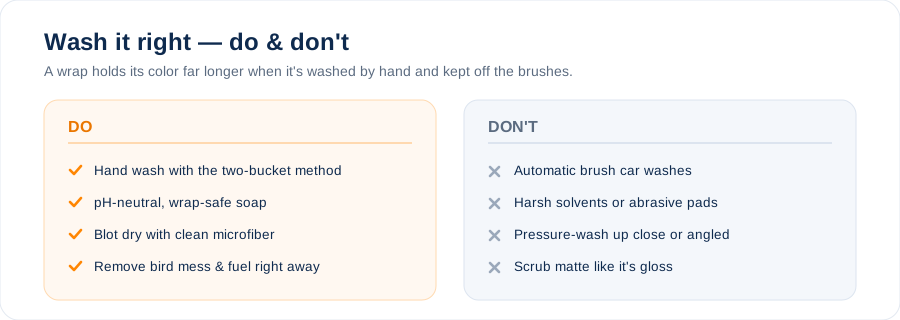
Do:
- Hand wash with pH-neutral soap and the two-bucket method
- Dry with microfiber; chase water out of seams
- Remove bird droppings, bugs, and fuel right away
- Add a wrap-safe ceramic coating and park in shade
Don't:
- Run a wrap through brush or touchless automatic washes
- Use solvents, degreasers, abrasives, or dish soap
- Wax or polish a matte or satin finish
- Pressure wash close, angled, or at the edges
Treat the film well and it'll look sharp for years. When the day finally comes to swap the look or take it off, do that the right way too — see our wrap removal & care guide. Thinking about a fresh color-change wrap or your first one? Get started and we'll walk you through finishes, care, and pricing.